Planning a trip usually starts with choosing a destination, booking accommodation, and deciding what to see. But there is one small detail that can make a surprisingly big difference to your travel experience: the shoes you bring.
A city break filled with museums and cafés calls for different footwear than a resort holiday, a countryside escape, or a business trip. Packing too many pairs takes up valuable luggage space, while bringing the wrong shoes can make an otherwise enjoyable itinerary less comfortable.
The goal is to find a practical balance between versatility, comfort, and personal style.
At ShoesWoon, we believe that thoughtful footwear choices can make everyday adventures more enjoyable. Here is how to plan your travel shoe collection around your destination, activities, and packing needs.
1. Start With Your Travel Itinerary
Before choosing which shoes to pack, look at what you will actually be doing during your trip.
Your itinerary provides a much more useful starting point than simply choosing shoes to match every outfit.
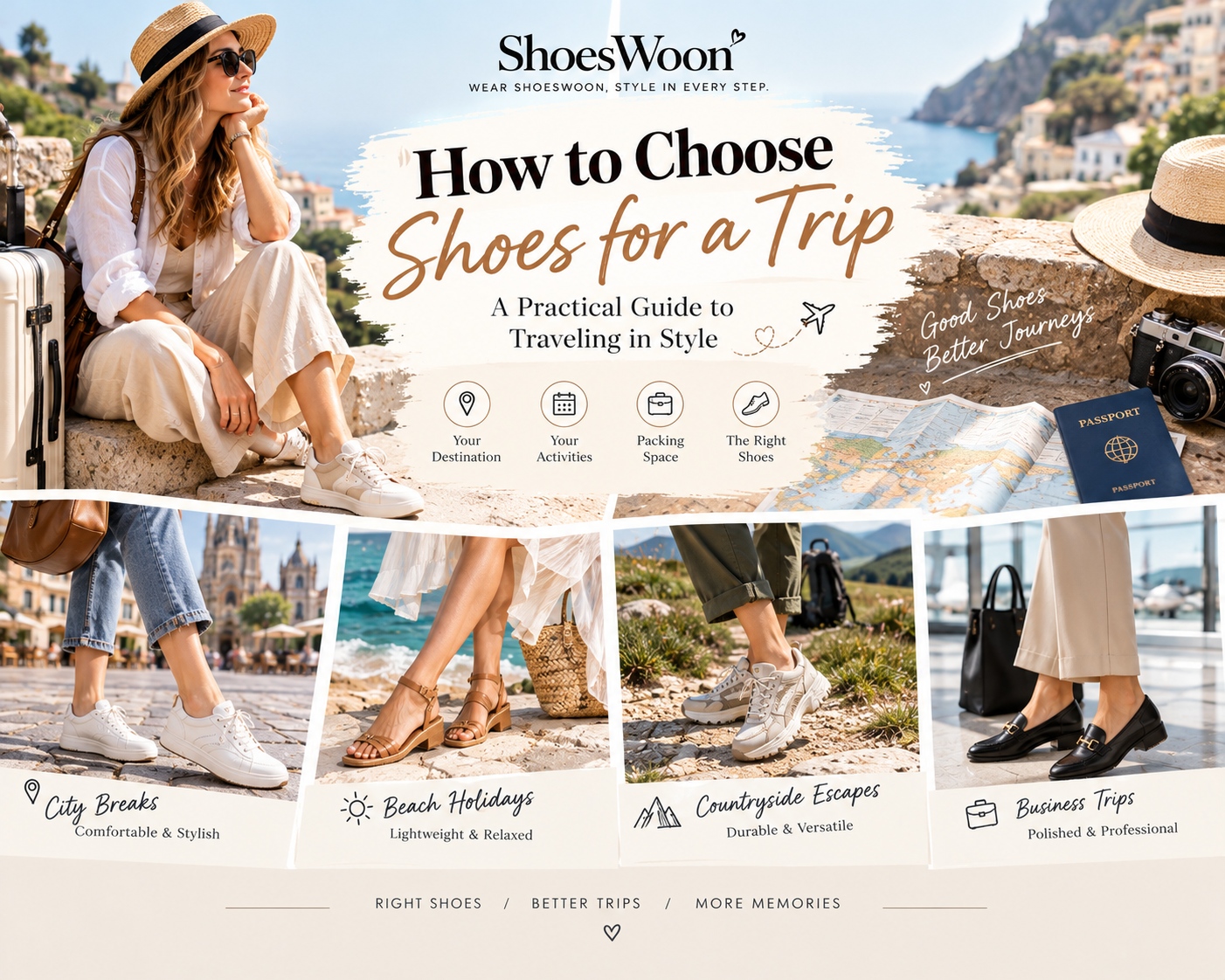
City Breaks and Sightseeing
City trips often involve a combination of walking, public transportation, shopping, and dining.
A comfortable pair of walking shoes should usually be your first priority. Depending on your personal preferences, this could mean supportive sneakers, comfortable flats, or well-fitted loafers that you have already worn on similar outings.
If your plans include evening dinners or special events, consider adding a second pair that creates a more polished look without requiring an entirely different wardrobe.
Beach and Resort Holidays
For beach destinations, lightweight sandals can be useful for relaxed activities and casual outings.
However, beach footwear is not necessarily suitable for every situation. If your itinerary includes sightseeing, uneven paths, or extended walks, bring an additional pair designed for those activities.
Think about where you will be walking rather than assuming one pair can comfortably handle the entire trip.
Business Travel
Business trips may require footwear that transitions between professional meetings, commuting, and evening plans.
A versatile pair of loafers, flats, or low heels can work well when they suit your dress code and daily schedule.
If the trip includes formal events, check whether your everyday option will be appropriate before deciding whether another pair is necessary.
Countryside and Outdoor Trips
Outdoor destinations require more attention to terrain and conditions.
Paved village streets, gravel paths, muddy trails, and rocky surfaces place different demands on footwear. Choose shoes with suitable traction, stability, and coverage for the activities you have planned.
For demanding hikes, use purpose-designed hiking footwear rather than relying on ordinary fashion shoes.
2. Use the One-Pair-Per-Purpose Rule
One common packing mistake is bringing several pairs of shoes that all serve essentially the same purpose.
Instead, organize your choices around the activities you need to cover.
For many trips, a simple framework works well:
-
Everyday exploration: A comfortable pair suitable for your main walking activities.
-
Dressier occasions: An option for restaurants, events, or outfits that call for a more refined appearance.
-
Destination-specific activities: Footwear designed for the beach, hiking, or another planned activity when needed.
You may only need two pairs for a short city break. A longer holiday with several different activities might require more.
The right number depends on your itinerary, not an arbitrary packing rule.
Before adding another pair, ask yourself whether it serves a genuinely different purpose or whether something already in your luggage can do the job.
3. Test Your Shoes Before Leaving Home
A vacation is rarely the ideal time to discover that a new pair of shoes causes discomfort.
If possible, wear your chosen travel shoes during ordinary activities before your departure.
Walk around your neighborhood, spend time standing, and check whether the shoes remain comfortable after extended use.
Pay attention to pressure points, slipping heels, rubbing, and whether your feet feel secure during movement.
If a pair consistently causes discomfort at home, it may not become a better choice simply because you are traveling.
For longer trips, consider bringing any accessories you already know work well for you, such as familiar insoles or blister-prevention products.
The aim is not to guarantee that every step will be effortless, but to reduce avoidable surprises.
4. Consider the Practicalities of Airport Travel
Airport days often involve standing in queues, walking through terminals, carrying luggage, and moving between different forms of transportation.
For these situations, footwear that is comfortable and easy to manage can make the journey simpler.
Slip-on designs may be convenient at security checkpoints where removing shoes is required, although airport procedures vary by location.
If you prefer lace-up shoes, choose a pair that is straightforward to put on and take off.
Also consider the climate of your destination. A long journey from a warm departure city to a cold destination may influence which shoes you wear during transit and which you pack.
For international flights, prioritize comfort and practicality over bringing your most delicate or difficult-to-wear pair on the journey.
5. Make Every Pair Work With More Than One Outfit
Travel packing becomes easier when your shoes can be worn with several different outfits.
This does not mean every item must match everything else. It simply means choosing footwear that fits naturally into the clothing you plan to bring.
For example, a neutral pair of sneakers might work for sightseeing, casual meals, and transportation days. A simple pair of flats could suit both daytime activities and a relaxed evening out.
Before packing, mentally connect each pair of shoes to at least two or three planned outfits.
If a pair works with only one very specific look, consider whether it deserves the luggage space unless the occasion is particularly important.
This approach allows you to create more outfit combinations without increasing the number of shoes you carry.
6. Think About Weight, Shape, and Luggage Space
Shoes can take up more room in a suitcase than their appearance suggests.
Chunky soles, rigid structures, and larger boots can occupy considerable space, especially when traveling with a small carry-on bag.
To pack more efficiently, place heavier shoes near the base of your suitcase and use the space inside suitable shoes for small items such as socks.
You can also place shoes in individual bags to keep their soles separate from clothing.
If you are bringing a structured or delicate pair, protect it from pressure that could distort its shape.
For trips with multiple destinations, remember that every additional pair must be carried between hotels, trains, airports, or other stops.
A little planning can help you avoid packing footwear that looks appealing in theory but adds unnecessary weight to your journey.
7. Check the Weather and Local Conditions
Even a well-planned itinerary can be affected by unexpected weather.
Before leaving, check the forecast for each destination and consider the surfaces you are likely to encounter.
Rain may make smooth outdoor surfaces slippery. Hot conditions may influence which footwear feels appropriate, while colder temperatures can make additional coverage more important.
If you expect wet weather, choose shoes with suitable water resistance and traction. Do not assume that every leather, fabric, or synthetic shoe is waterproof.
For destinations with varied conditions, consider whether one versatile pair plus a specialized option will cover your needs more effectively than several similar pairs.
Your footwear should support the activities you have planned rather than simply match the photographs you hope to take.
8. Keep Your Travel Shoes Ready for the Return Journey
The usefulness of travel footwear does not end when your trip is over.
After returning home, inspect your shoes for dirt, moisture, or visible wear. Follow the manufacturer's care instructions and allow damp footwear to dry thoroughly before storing it.
If you have been traveling in wet conditions, avoid sealing damp shoes inside a closed bag for an extended period.
It can also be helpful to note which pairs you wore frequently and which remained in your luggage.
That information makes packing easier the next time you travel. You may discover that two carefully selected pairs were more than enough, or that a particular activity required footwear you had not anticipated.
Every trip offers an opportunity to refine your packing decisions.
Final Thoughts: Travel Light, Plan Well, and Enjoy the Journey
Choosing travel shoes is not about packing the largest collection or finding one pair that can handle every possible situation.
It is about understanding your itinerary, prioritizing the activities that matter most, and selecting footwear that serves a clear purpose.
Start with the shoes you need for walking and daily exploration. Add an option for dressier occasions or destination-specific activities when necessary. Test your footwear in advance, check local conditions, and consider how much space each pair will occupy.
With a little preparation, your travel wardrobe can become simpler, more practical, and easier to manage.
At ShoesWoon, we believe that the right footwear should support your plans and let you focus on the experiences that make every journey memorable.
Explore our collections of flats, loafers, sandals, sneakers, and other women's footwear to find styles suited to your next adventure.
ShoesWoon — Wear ShoesWoon, Style In Every Step.